
The Habit of Wrongness
The End Of Two
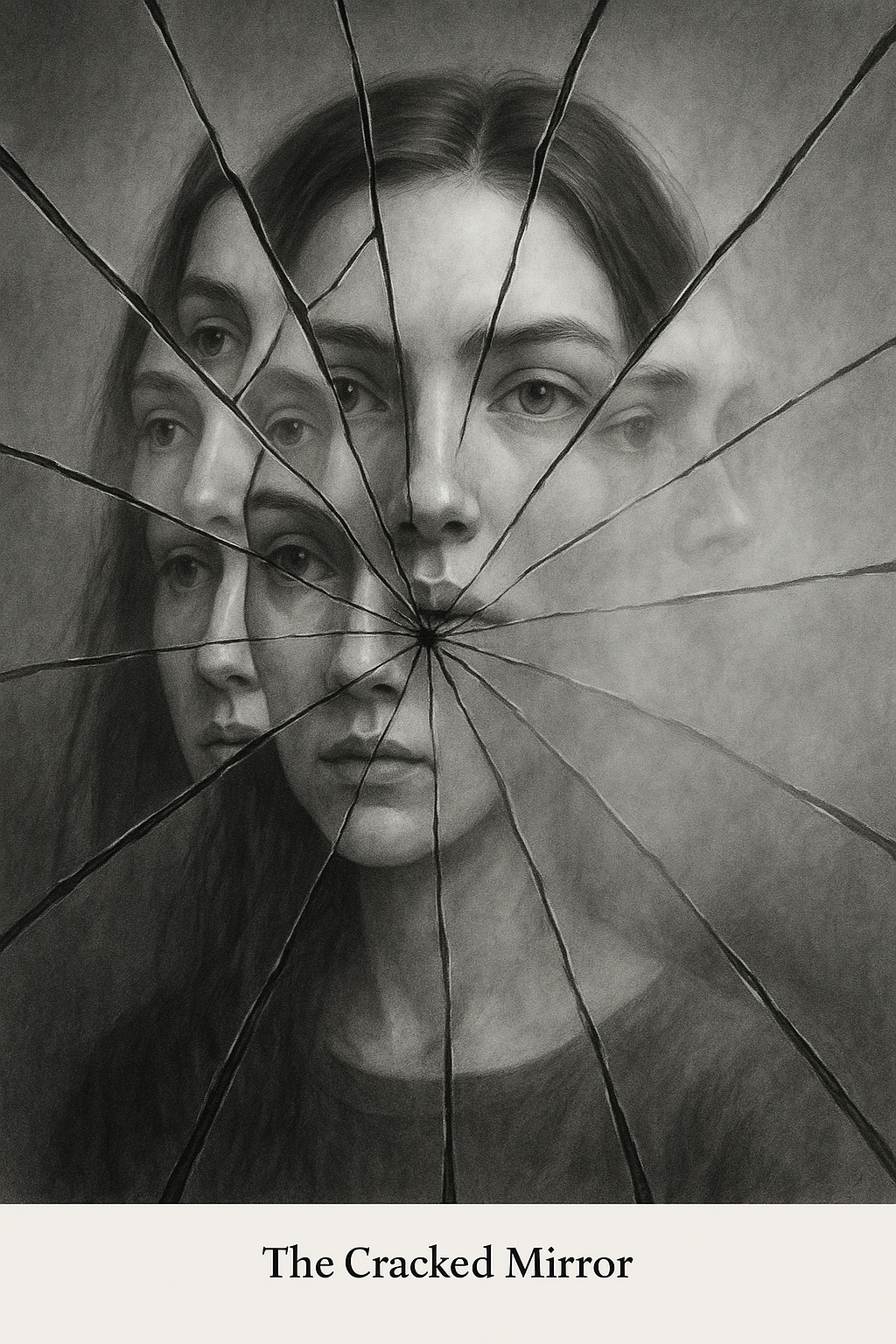

I thought I’d broken out, but it was just another dream of freedom.
The habit of wrongness runs deeper than thought.
If you still need someone to be wrong, you’re not free yet.
The mind survives by defending its own hallucination.
For the ones who’ve seen through the first illusion and wondered why the world still hurts.
This is what remains when the masks fall but the mind keeps pretending.
I know that (fill in the blank). We can all fill in that blank because we each have our own theories. In order to survive in life, a person is basically forced to formulate something—some concept of reality, some story of his or herself must exist to live it.
Is it any issue? Or is it only an issue when my imagination imposes itself on what you want to believe? Most living beings now accept the idea that other beings and what they do affect their reality. A person usually feels he is reliant on the actions of others to reinforce or support his own version of reality or what he believes is true.
When it doesn’t happen or things go awry—against your wishes—out come the defenses. The belief that your own world is interdependent seems obvious, but what if it wasn’t so? What if that was just a belief—and as a belief that’s almost never questioned, the universe reflects this reality back to all who believe in it, just like it does all beliefs?
It’s almost impossible to believe that you’re basically on your own, floating in your own reality to the exclusion of anything else. Mainly because of how we live now, we are constantly coming in contact with other people. We work with people, we work for people, we have our children and our families, there are people walking down the street, people in cars driving all around us—the examples could go on indefinitely.
It seems like we are surrounded, but what if we weren’t? What if everything we see was only ever an illusion? That would be cool, right? There you are, just playing with dreams and nothing else—the projections are false images and only the screen is real.
Okay, but what’s the screen then? Well, that’s what you really are. You’ve heard that, I’m sure. Problem solved: you are only imagining your life. But that’s where most awakenings get stuck.
It makes perfect sense to me that if you learned you were just dreaming, you’d want to make sure the dreams you were dreaming were up to your standards. You’d want to make them nicer or easier or even fantastic, because why settle for shit if you don’t have to? There’s simply no reason for that, right?
So what we do is we start changing, and the first changes are within us. Being that we’ve seen life is basically unreal, most as a rule stop reacting to it.
Now if someone yells at you, you stop, take stock of the situation, determine that regardless of your initial sensory input or involuntary inner reaction, nothing is actually happening. You might wonder how you’d have any reaction at all, but the patterns the body learned to initiate and play out take a while to fizzle out.
Before awakening, you were under threat, under siege, the world was dangerous and you had to be careful how you’d navigate it. Humans invariably learn that the opinions of others mean more than their own. “How do I look right now?” becomes a hallmark of life.
We’re on the stage, but the stage is real. It’s not a welcoming, entertaining play when you’re asleep—it means something. Every minute of the day, this evaluation of yourself and what you’re doing, what you’re like right now, is front and center in your imagination.
Most live their lives under the delusion that people are watching them, so much so that everything they do is to artificially prop up the illusionary false self that says they’re not only okay, but they’re great. “You’re doing better than most,” the false structure tells them. But they can never let up on that.
If they achieve anything, it’s only a temporary situation since they’ll be expected to do more and better. Achieving anything raises the stakes in your imagination. It says, “Well, if you could do or be like that, how much greater things might you do and be?” Constant activity is the hallmark of a successful person, we learn.
Of course, there’s a flip side. There’s always a flip side—that’s why it’s called duality. What’s on one side needs the other side. If there was no such thing as success, then where would failure be? It wouldn’t even exist, right? And no one would be judging anything.
So on this flip side is the person who just can’t seem to get a leg up. Theirs is a life in constant turmoil; they can’t reach even the smallest plateau of satisfaction because their bodies and minds are so full of stress that feeling good for any length of time—outside of maybe drinking beer—never happens.
“The struggle is real,” you’ll hear them say again and again, which just means they believe it, so it is. The terminally depressed and/or agitated person is actually the norm now.
Mainly what’s happened here is that they believe so many lies, a breath of fresh air will never blow through. Everything they try to do or achieve is destined to fail, but that’s not as bad as it sounds because this is where you can find the truly discontented—and only this group has any reason to break out of a game that wasn’t designed with their satisfaction in mind.
You see, most people, if they have any self-respect at all, think life is basically good enough. They have just enough success with either money or relationships to guarantee that breaking out will never happen. They looked to the world, society, and culture to define them, and it did so to a degree that makes a mundane, non-eventful life seem like a gift.
Usually these types are able to hide any serious movement of thought from themselves. They are usually in a position to shut down any inquiry that questions their motivation or lifestyle.
But now these other ones are quite different. They may be totally disillusioned with life. This usually happens when it becomes evident that their fantasies about life and who and how they wished they were will never happen. The chance of luck is over.
I think that was actually “me,” who and how I was before all this. Wherever I looked, I couldn’t stop myself from thinking, “This is stupid. This doesn’t make sense. If this is life, we’ve either gotten it all wrong or it really does hate us—it created us because it enjoys watching life suffer.”
Unfortunately, most people at this stage don’t have the energy reserves to break out. They are so downtrodden that no effort for anything more than dinner and a movie is produced. They may complain incessantly about life but are never motivated to take even one step in any other direction.
Usually they think the world structures are against them and they don’t stand a chance against all the forces that tell them to stay where and how they are and just ride it out. I would put 75 percent of humanity here, but the numbers may be much higher, because even the successful guy isn’t any better off.
Both groups completely miss the sanctity of life. Usually they are selfish to a fault, and this selfishness keeps them locked in their respective dungeons. Mostly they are always negative, but it shows up in their mind as a sort of, “I’m right and everyone and everything else is wrong.”
They invariably think they know what life is and that there’s nothing else to find out about it. If they are reading this, they will mock it almost immediately and probably dismiss it outright as just some more bullshit. Well, maybe it is. I don’t say it’s not—but oh well, I can’t worry about that either. If it is and you want to worry about it, maybe that’s your job. We all have one.
Usually before a person winds up on the hopeless end of things, they’ve tried a lot of practices that basically did nothing for them. They may be well-read in the Vedas or all the enlightened masters as well.
Sometimes the ego then exclaims they get it, but instead of letting anything transform them it turns them into a sort of rigid being that thinks there’s nothing anyone can do. I think these are probably the types that start talking the most about the void, silence, or nothingness as if that was the final word.
Even if they’ve seen the dream is just a dream, they dismiss the wondrous facets of the fact that we are all imagining. All dreams will be wrong to them, so just don’t have one is their advice.
Here’s an example of illusion that most people live with and will always live with from birth to death, that they usually don’t even notice—not once. It’s a habit they’ll never break, and it robs them of the ability to discover their true function, which is true dreaming—or the reason they were born. (Everyone has one. Nothing is actually happenstance like you might think; you weren’t actually born to become, let’s say, an accountant or even a doctor—sorry, but that’s all bullshit.)
This habit takes many forms, but its core component is believing in anything that’s not true and then complaining about it.
It can be complaining or talking about the habits or mannerisms of others, how the world works such as in political structures—basically anything that you think is the world or in the world that you must continuously navigate or that stands in your way of something you’d like to do or even say, because your mind has labeled it “wrong.”
Let’s call it the habit of wrongness, then. Let’s say someone wrongs you. You believe this has occurred and there’s nothing you can do about it now at this late date but continue to rehash the story for the rest of your life.
It may have happened in childhood or long ago, but it’s still as fresh for you today as if it had occurred yesterday.
The idea that something has either gone wrong, is going wrong, was wrong, might be wrong, will be wrong—either with yourself or others, the world, anything in the world you imagine—is literally a habit of mind.
Of course, the ramifications of this habit take many forms, the main one being complaining. Who do you know that doesn’t do it?
When was the last time you walked around thinking and knowing that everything was right? Probably has never happened. You’ve probably never even had a day that was literally perfect.
The mind is in a state of seeing strife, injustice, misfortune. We don’t live right, humans get dumber, we get indoctrinated—whatever. And of course, we do. But if we know this, then how is it we never as a species get out of it? Why do we continue to go along with all the things that make us miserable and dejected?
Even people who have a lot of money might set out to change something and end up either making it worse or it stays the same. Nothing changes. What’s the real culprit?
To fully understand wrongness, you must understand what it represents—the idea that I’m right and they’re wrong. Who holds this opinion, always to their own detriment, that what others do affects you—either internally because you have to be aware of it or you might encounter it? You do.
You’ve been born into this story or mold. To hold this idea as real within subjects us to the belief that our lives depend on the actions of others, and since we can’t control what others do, we must protect ourselves from their actions and/or the manifestations that come from them.
“Humans are flawed and need to be fixed” is another layer. This is basically the most fundamental form of resistance that, in order to be fully free, you must relinquish.
No one and no thing in the history of life has ever wronged anyone. Everything that’s ever happened happens with explicit consent and intention to do so. Whatever happens, you invite it albeit stupidly for the most part. That's how it usually goes. No one really gets out of that, but just how bad it gets is a personal affair for sure. There's never been a shortage of suffering shit shows but that's not your fault more a function of the design itself.
I think you alone are solely responsible for every single thing you have ever experienced, although you can't really help that. We all grew up learning many false things, just the way it is. Everyone is subject to pretty much the same lies. Maybe the only difference is some live with them and others reject them and free up the energy to move on.
This one concept is what the words “And you will be troubled” in the Bible are referring to. Wrongness—all wrongness—is in the eye of the beholder, which is what you are.
Nothing is out there unless you believe it is. You can believe the world of people and how they live is wrong, but this is precisely the mechanism that will bring you face to face with what you believe is wrong again and again.
There’s no way around this. The minds of many believe in it, and therefore you can only rid yourself of it—which is what you must do if you want to break through to the next layer of reality—something so different most don’t even dare to imagine it might exist.
The energy of fear that most of us have lived with our whole life still has momentum, as if it secretly waits for situations to expose these pockets of fear-based energy that just naturally have the tendency to hang on and hang out in our very tissues.
Time does reduce them—slowly, over time fear dissipates—but it’s too slow this way. By the time you are empty of it, you will surely be dead, with ten to twenty-five percent still in you. And that’s if you’re lucky.
If you’re like most people, you are still full of it. At present, humans have so many fears there’s no way to separate one from another—they basically bleed into every aspect of our lives without our knowledge.
Mainly, if they aren’t being released and instead we try to control our fear, it just compounds in upon itself until eventually life becomes so difficult it blows up and you’ve got a crisis on your hands.
What to do?
That’s the next article — “The Ways of Fear and How to Rid Yourself of It.”